Wits commands the global stage at the 81st UN General Assembly
The Wits School of Governance (WSG), alongside Wits University Vice-Chancellor and Principal, Professor Zeblon Vilakazi, projected African institutional leadership and governance expertise at the highest level of international diplomacy during the 81st Session of the United Nations General Assembly (UNGA 81) High-Level Week in New York.
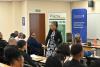
On 24 September 2026, the University of the Witwatersrand took a leading role in the Joint Presidential Roundtable on Education, Skills and Jobs through South-South Cooperation. Convened by the African Union Development Agency (AUDA-NEPAD) in strategic partnership with the International Cooperation Center (ICC) of the People's Republic of China, this high-level event aimed to accelerate Africa's transition from education to productive industries and decent jobs.
Underscoring the University’s global prestige, Vilakazi framed the presidential dialogue. Delivering the opening remarks, the Vice-Chancellor issued a powerful call to action: "The next phase of Africa's development must be about changing that equation. The themes before us today speak to one central question: How do we turn Africa's human potential and natural wealth into economic capability and opportunity for its people?". He further emphasised the critical role of academia in this transition, noting, "Education cannot be the end point. It must lead to opportunity".
"There is now a much stronger determination across the continent to build productive capacity, deepen intra-African trade, invest in skills and technology, add value to our resources, and create opportunities for Africa’s young people," said Vilakazi and noted that this ambition is reflected in Agenda 2063 and in the work of AUDA-NEPAD.
The Vice-Chancellor lamented the implementation challenges when it comes to policies and said the "real measure of progress is whether those policies translate into jobs, stronger institutions, greater productive capacity and wider economic opportunity".
Following this framing, WSG Distinguished Professor Adebayo Olukoshi co-moderated the session, guiding strategic policy conversations alongside five African Heads of State, including Advocate Duma Gideon Boko, President of the Republic of Botswana, Mr Adama Barrow, President of the Republic of The Gambia, Mr John Dramani Mahama, President of the Republic of Ghana, Dr William Samoei Ruto, President of the Republic of Kenya and Dr Emmerson Dambudzo Mnangagwa, President of the Republic of Zimbabwe.
Reflecting on the founding mission of WSG, Olukoshi reminded the delegation that the School was established with the "sole objective of ensuring that higher education institutions contribute towards enhancing the capacity of states in the continent". Drawing on the legacy of the late President Nelson Mandela, he anchored the dialogue by stating, "progress towards our collective development and transformation will depend on how successful we are in our efforts to sustain a collective action".
The roundtable was designed as an action-oriented platform to mobilise political leadership, technical cooperation, and catalytic investment. As custodians of the University's collaboration with AUDA-NEPAD, Acting Director of Executive Education, Raesetsa Hopane also attended the session.
"Our prominent role at UNGA 81 is a testament to the Wits School of Governance's standing as a premier hub for policy innovation and pan-African leadership. By framing these presidential dialogues alongside Heads of State and global development partners, we are actively shaping the actionable frameworks required to drive South-South cooperation, secure reparative justice, and build Africa's future workforce. This is academic excellence translating directly into continental and global impact,” said Professor Themba Maseko, Head of the Wits School of Governance.
Related Articles